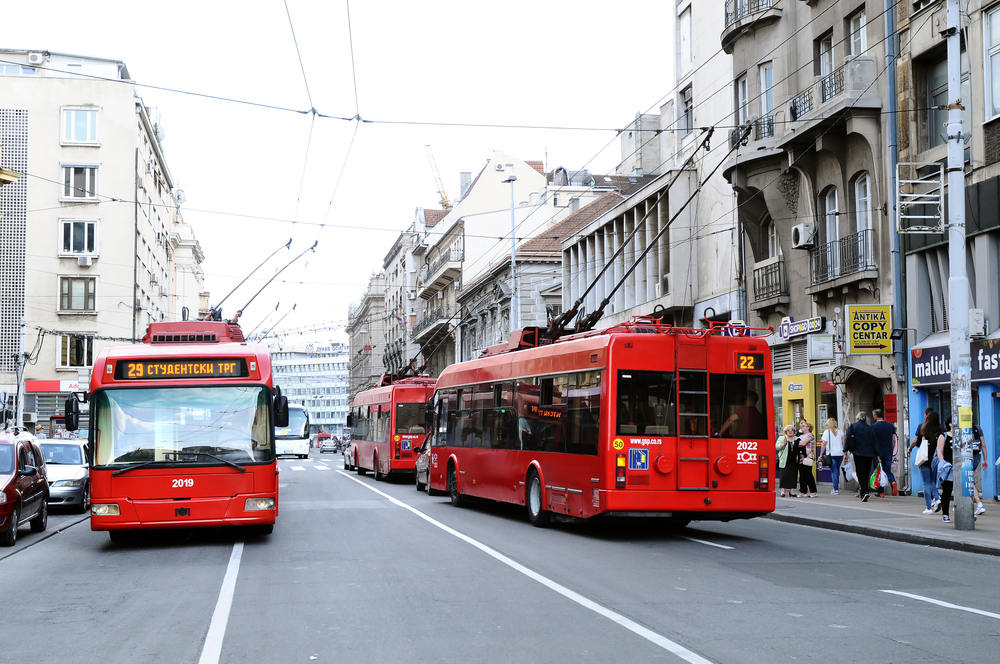
If you’re landing in Belgrade for the first time, your very first impression will probably be: “This city is bigger and louder than I expected.” You’ll see buses rushing by, red trams ringing their bells, and people darting across streets that seem to have a life of their own.
But here’s the good news: getting around Belgrade is now easier (and cheaper) than ever because public transport is completely free.
Whether you’re heading from Nikola Tesla Airport to the city center, exploring Zemun by the river, or hopping between museums and kafanas, this guide will tell you everything you need to know about buses, trams, shuttles, taxis, and a few local tips that will make your stay smoother.
How to get from the Airport to the City Center of Belgrade
Belgrade’s Nikola Tesla Airport (BEG) is about 18 kilometers west of the city center, and there are several ways to get into town depending on your budget, luggage, and patience.
A1 Shuttle Bus

The A1 express shuttle is the most convenient and popular choice for travelers who just want to get downtown quickly and cheaply.
Route: Airport → Tošin bunar → Fontana (New Belgrade) → Slavija Square (city center)
Travel time: about 30 minutes (can vary with traffic)
Ticket price: around 400 RSD (pay to the driver directly, cash only)
Departures: every 20–30 minutes
Operating hours: roughly from 5:00 AM to midnight
The A1 buses are clean, modern, and often filled with fellow travelers. You can’t really get lost because the driver usually announces all stops, and Slavija is a big roundabout that connects you to almost anywhere in the city.
Heads up – the A1 is more of a shuttle van than a big bus, so it gets packed pretty fast. Try to hop on early, or you might have trouble finding space for your luggage.
City Bus Line 72

If you’re not in a rush and want the cheapest (technically free) way to get downtown, take the city bus number 72.
Route: Airport → New Belgrade → Zeleni Venac (central city)
Fare: free (part of Belgrade’s public transport system)
Duration: 45–60 minutes, depending on traffic
This bus makes more stops than A1 and takes a bit longer, but it’s a good way to see the “real” Belgrade along the way such as blocks of New Belgrade, the Sava River, and the bustling Zeleni Venac market where the line ends.
The bus usually runs every 25 minutes until midnight, and after that once an hour until around 2:30 AM. Here you can check the exact timetable for both the day service (from 4:50 AM to midnight) and the night service.
When you open the link, don’t forget to translate the page into English and select the direction you need.
Taxis from the Airport

Taxis are reliable and straightforward, but there’s one golden rule: always use the official taxi counter inside the arrivals hall before you exit the terminal.
There, you’ll be assigned a vehicle and a set price based on zones.
Average fare to the center: around 3,000 RSD (25–30 €)
Travel time: 20–30 minutes
Avoid anyone who approaches you directly in the arrivals area – unofficial drivers are a common scam at many airports, and Belgrade is no exception.
We recommend choosing one of the following taxi services: Yandex, Pink Taxi, or Naxi Taxi. Before getting into the car, ask the driver roughly how much the ride to your destination will cost, so you don’t end up paying more than expected. The final price shouldn’t differ by more than about €5 from the amount the driver quoted.
Free Public Transport in Belgrade – How It Works
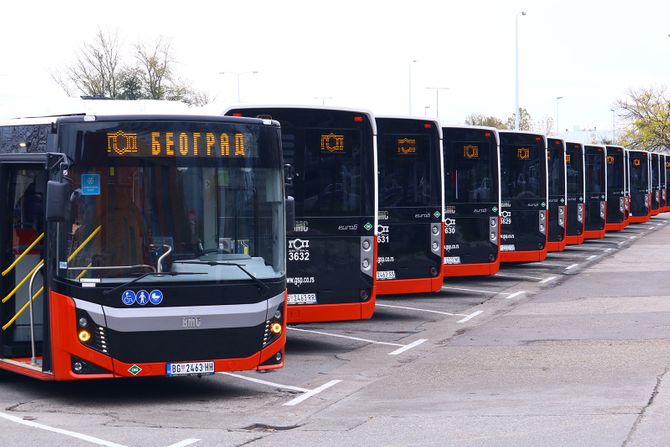
In early 2025, Belgrade became the first capital city in the Balkans to introduce completely free public transport.
That means:
No tickets, no cards, no validation.
You can board any bus, tram, or trolleybus freely.
All services run under GSP Beograd, the city’s main transport company.
The decision was made to reduce traffic congestion, encourage people to use public transport, lower pollution and surprisingly, it’s working. More locals are leaving their cars at home, and tourists get to explore the city without spending a single dinar on transport.
Understanding the System
Belgrade’s public transport network is extensive. It may look chaotic at first, but once you grasp the basics, it’s quite logical.
If you want to know how to get to a place, just use Google Maps. It will show you which transportation to take, how long the trip will take, and even how many minutes until your bus arrives.
Locals often use a free app called Beograd Plus, which is also available in English. To get the info, you’ll need to enter the bus stop code (usually written on the bus station). The app will then show you how many stops away your bus is and when it will arrive. Keep in mind that you need an internet connection and the stop code to use it.
If you don’t plan to use the internet outside your accommodation, it’s a good idea to download an offline map from Google Maps. That way, you can still find your way around later. Without internet, Google Maps won’t show the route, but you can still see your location and navigate easily.
Buses

They cover the entire city and beyond. Some routes stretch far into the suburbs, while others loop through the city center. Expect older vehicles mixed with new electric ones.
If you want to check the bus schedule, you can do it here. Just enter the number of the bus line you’re interested in, then select the direction you’re going and that’s it. You’re doing it right if it looks like on the picture below.

Trams
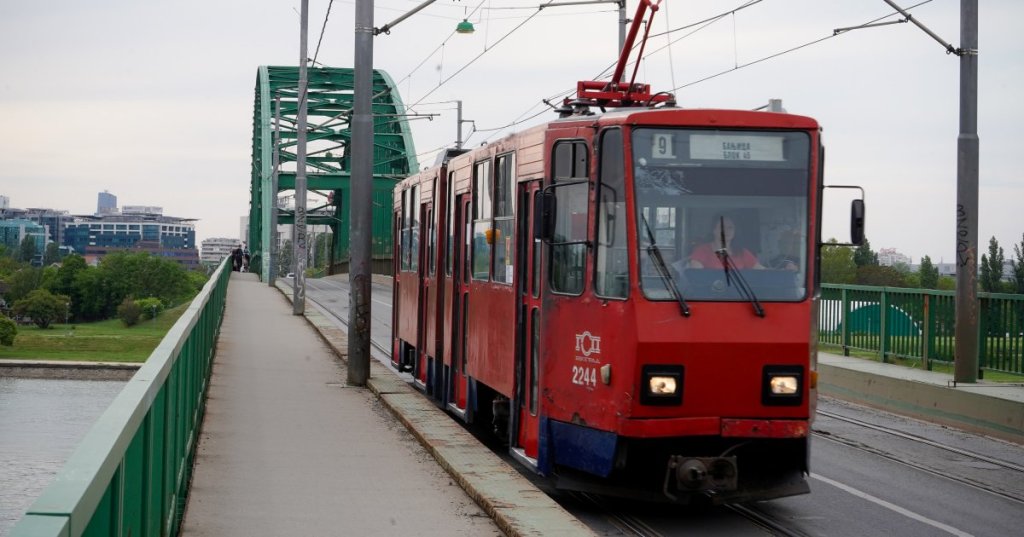
Trams are an iconic part of Belgrade’s charm, slow but scenic. Line #2 makes a full circle around central Belgrade, passing by many sights like Kalemegdan Fortress and the Parliament building. It’s a fun, local way to see the city.
Trolleybuses

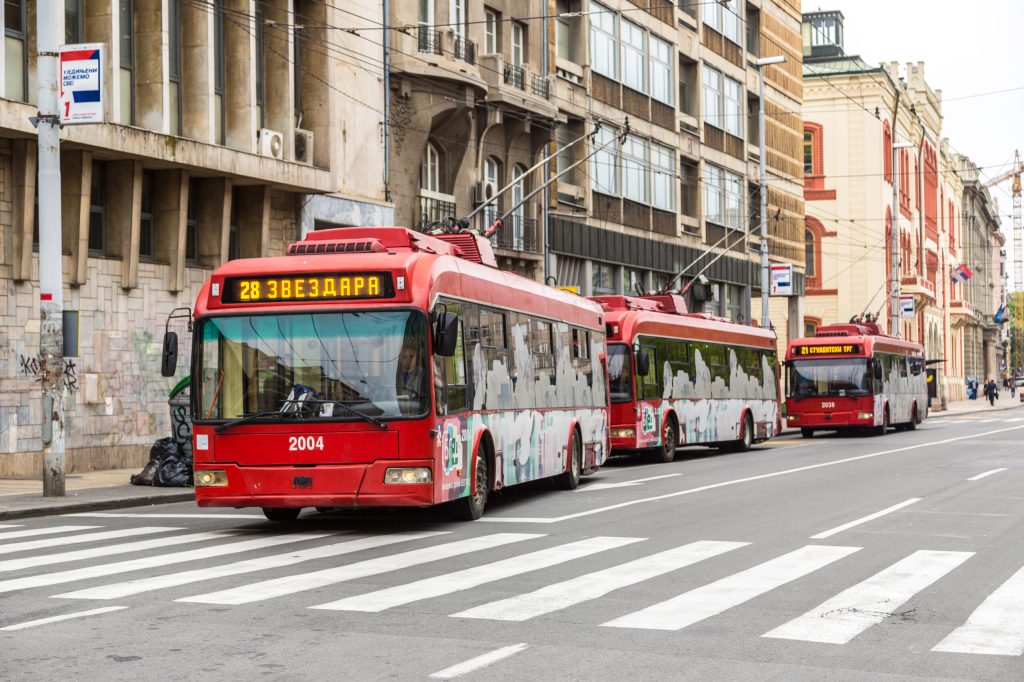
Running mainly around Vračar, Slavija, and central areas, these electric buses are quieter and smoother than the regular ones.
Operating Hours
Most lines run from 4:30 AM to midnight.
There are night buses (marked with an “N”) that operate after midnight, mainly connecting the city center with the outskirts.
During rush hours (7–9 AM and 4–6 PM), expect full buses and some pushing – it’s all part of the local experience.
BG Voz – Belgrade’s Urban Train

If you need to cover longer distances – say, between Zemun, Vračar, and the outskirts – BG Voz is your best friend.
It’s essentially a city train system, integrated into the public network and also completely free.
Route: Zemun – New Belgrade – Vukov Spomenik – Karađorđev Park – Pančevački Most – Ovča
Full ride time: about 45 minutes
Trains: modern, air-conditioned, punctual
It’s fast, comfortable, and especially useful if you’re staying outside the central area or want to skip the traffic on the bridges.
Alternative Transport Options
While free public transport covers most needs, sometimes you’ll want something faster or more direct – especially late at night or if you’re carrying luggage.
Taxis
Taxis are still very affordable by European standards. Just make sure you pick a registered company, such as:
Pink Taxi (+381 19803)
Beo Taxi (+381 19700)
Lux Taxi (+381 19144)
Naxis Taxi (+381 19804)
Average fares:
Start: 270-320 RSD
Per kilometer: 120–150 RSD
Short city rides: 800 – 1000 RSD
Drivers generally don’t expect tips, but rounding up to the nearest hundred is appreciated.
CarGo & Yandex Go
These apps work very well in Belgrade. Prices are often lower than taxis, and you can pay by card directly in the app.
CarGo (local equivalent of Uber) has great coverage and even offers premium or family vehicles.
Yandex Go is often the cheapest but may vary depending on demand.
They’re all safe and easy to use – just enter your destination and go.
Tips for Getting Around Like a Local
Belgrade has its quirks, and public transport is no exception. These little tips can make a big difference:
Plan extra time. Traffic jams are real – especially across the Sava bridges and around the city center.
Google Maps works perfectly for bus and tram routes (even real-time arrivals). Moovit is another good option with English instructions.
Bus stops aren’t always clearly marked. If you’re unsure, just ask someone -Belgraders are usually friendly and happy to help.
Watch your pockets in crowded buses, especially near Zeleni Venac or Terazije.
Avoid rush hours if you can – take your time and enjoy a coffee instead.
Don’t stress about tickets. Everything GSP-operated is free -no inspectors, no fines, no confusion.
Stay hydrated in summer. Some older buses don’t have air conditioning, and Belgrade can get hot in July and August.
Free Transport – How It’s Going So Far
The idea of free public transport sounded almost utopian when it was announced, but by mid-2025, it’s surprisingly functional.
The city now funds the system through taxes and environmental programs, aiming to cut private car use by 20%. Buses are still crowded at peak hours, but there’s a visible shift – more people are using trams and BG Voz, and the air feels cleaner in the center.
For visitors, it’s a dream: you can hop on and off anywhere without worrying about fares or validation. Just step in, grab a seat if you’re lucky, and enjoy the ride.
The only things you still pay for are:
The A1 airport shuttle
Private transfer services
Taxis or ride-hailing apps
Everything else – totally free.
Final Thoughts: Discovering Belgrade Like a Local
Navigating Belgrade might look intimidating at first glance, but once you dive in, it becomes part of the city’s charm. The buses may rattle, the trams may be old, and schedules might not always be precise – but there’s a rhythm and authenticity that you’ll grow to like.
Now that public transport is free, there’s no excuse not to explore every corner of the city.
The best way to understand Belgrade is to move through it -slowly, curiously, and like a local.
And who knows? You might even end up loving that old bus that groans up the hill as the city glows in the sunset.
 HostelsBelgrade
Постави коментар